Turkey, Timers and Trifle: Rick Stein’s Recipe for a Stress-Free Christmas

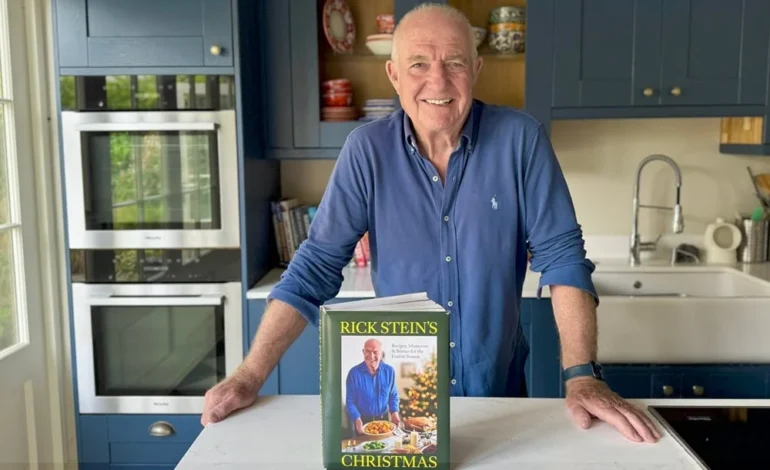
Christmas lunch is the one day of the year when home cooks are expected to perform like a restaurant brigade, which is why Rick Stein’s Christmas cooking advice is rooted in one simple idea: do less on the day itself, and do it better.
“In a restaurant kitchen, you’re doing four or five things really, and nothing else, also they’re all part of the same course,” he says. “When you’re cooking at home, you have to do everything, therefore your timing has to be really good.”
Food & Drink — Latest from EyeOnLondon
Explore new dining ideas, drinks initiatives and reviews from across London’s food scene.
Backseat Bites: the UK’s first “restaurant in a car”
A new London concept turns the back seat into a dining room, pairing comfort food with a city drive.
Read the storyMore Food & Drink
Safety Thirst Awards: raising the bar in the Square Mile
How City venues are being recognised for safer drinking environments and higher standards behind the bar.
Read the storyMore Food & Drink
Pizza Pilgrims, Brick Lane: our latest slice-by-slice review
Neapolitan dough, bold toppings and a relaxed East End setting. We road-test one of London’s best-known pizza names.
Read the storyMore Food & Drink
Stein’s new festive cookbook, Rick Stein’s Christmas, sets out not just recipes but a plan for how to “do it all painlessly”. The dishes are classic Stein: from mini brioche toasts with whipped feta, fresh figs and pickled walnuts, and Jerusalem artichoke soup with crispy bacon, to semifreddo cheesecake with clementine and Campari syrup or a towering Black Forest trifle. There is seafood, of course, but the real theme is timing.
He advises: “Don’t leave everything until Christmas morning, there are many, many things that you think need to be done at the last minute – they really don’t.”
For Londoners juggling guests, travel and tiny kitchens, it is practical, unfussy guidance. Much of it also sits comfortably alongside official Christmas food safety advice on cooking poultry and planning ahead, which can be checked against a temperature probe at home.
The bird: avoid panic and overcooking
Stein is unapologetically traditional about the centrepiece.
“I think Christmas is special in that it is about celebrating the same things or every year,” he says. “I really quite like the repetitiveness because it only comes around once a year. So turkey or goose with all the trimmings is what it’s all about. I would feel like I’d sort of let people down if it was just roast beef, even if it was absolutely wonderful roast beef.”
His book offers variations for those who want them, from venison bacon and prune shortcrust pie to glazed bone-in Christmas ham and roast butternut squash wellington with porcini gravy. Yet his main warning is about the bird that still lands on most British tables.
So what are the main mistakes people make with turkey?
“Overcooking it,” he says. “It’s just a big chicken really. The biggest mistake is getting too nervous and overcooking it. People worry they’re going to get food poisoning if it’s undercooked which is very, very unlikely.
“Buy yourself a [oven] temperature probe to make sure you don’t overcook it. I think the safe temperature for a turkey is something like 70 degrees C. Once you start going over that, you get this problem with dry meat.
“I do suggest wrapping the turkey in buttered muslin [but] it’s really about not cooking it too long.”
In other words, Rick Stein’s Christmas cooking advice begins with trusting a thermometer rather than fear.
The gravy: make it the day before
If there is one thing he wants people to stop doing at the last minute, it is the gravy.
“The best advice – people that I’ve mentioned it to seem a bit surprised – is don’t make your gravy at the last minute,” Stein says.
“I would always buy a free-range turkey or goose, so I get the giblets, and I’m making giblet stock the day before, to make that really nice and rich. Then I get some chicken stock as well.”
“I start with a little bit of duck fat and put a bit of flour in (I don’t like a lot of flour in my gravy). I cook that out, then make the gravy, because then I can absolutely make sure it’s quite intensely flavoured.
“The next day, I’ve got that gravy, it’s made. Just having roasted my goose or turkey, take it out and use some of the gravy to de glass the roasting tray so I get all the goodness from that [and add it in].”
By the time the bird is resting, the sauce is already rich, reduced and ready. It is Rick Stein’s Christmas cooking advice at its most reassuring: do the messy work when the kitchen is quiet.
Roast potatoes: seven-minute rule and a dusting of polenta
Stein is almost obsessive about roast potatoes, which he ranks alongside gravy as the most important part of the meal. The key, he says, is firmness, not fluffiness taken to the point of collapse.
The trick is to make sure you parboil the potatoes, without over-parboiling them. “I go for seven minutes in lightly salted water,” says Stein. “Seven minutes is enough if you’re using Maris Piper or King Edward, to make them a bit crumbly on the outside.
“Shake the potatoes in the pan or colander to roughen up the edges a bit. I always sprinkle in a bit of polenta or semolina, to give it a bit of crumbliness.
“I tend to parboil the day before, but I don’t put them back in the fridge, I just leave them out. You can really tell the difference. And I always use goose fat or duck fat to cook them.
“But the secret, I think, is having a fairly firm potato and not in any way elastic. It’s got to have a sort of brittleness but not too brittle.
“I’m really hot on roast potatoes because I think actually the gravy and the roast potatoes are the most important part.”
For anyone cooking in a small London flat with a single oven, doing the parboiling and roughing-up the day before could be the single biggest gain.
Stuffing: match the bird, not the trend
“I don’t tend to put stuffing in the turkey anymore, just to cook it separately, but I always do stuffing,” he says.
If he is cooking goose, Stein prefers something lighter. “If he’s cooking goose, Stein prefers a sage and onion stuffing to accompany it – ‘because goose is so rich you want something quite bland to serve with it.’”
“With turkey, I tend to go for chestnut stuffing or sausage meat stuffing because turkey has got a less-rich flavour than goose. It can take a bit more flavour in the stuffing.”
The message is simple. Rich bird, plainer stuffing. Milder bird, more robust flavours.
Brussels sprouts: keep them plain and do not feel guilty
Sprouts are often the dish that makes cooks feel most resentful, but Stein takes a relaxed view.
“I have cut corners by buying pre-peeled from a supermarket.” He even tested them against fresh one year. “I tested them both and you couldn’t tell the difference.”
Perhaps surprisingly, he prefers sprouts without the usual embellishments. There is no chestnut and bacon combination in his Christmas spread.
Stein adds: “It’s not a sort of purity. It’s the balance of the whole meal. If you put stuff with every veg, they’re just fighting against each other.”
It is the kind of advice that lifts pressure rather than adding to it. Christmas, in his view, is not the moment to turn every side dish into a showpiece.
If you are stocking up for the festive season, Rick Stein’s Christmas can be ordered from his official online shop and makes an excellent gift for anyone who loves cooking at Christmas.
For more stories exploring London life, food and festive traditions, follow EyeOnLondon for original features and everyday insights across the capital.
Follow us on:



Subscribe to our YouTube channel for the latest videos and updates!

We value your thoughts! Share your feedback and help us make EyeOnLondon even better!