Perseverance rover completes AI drive on Mars

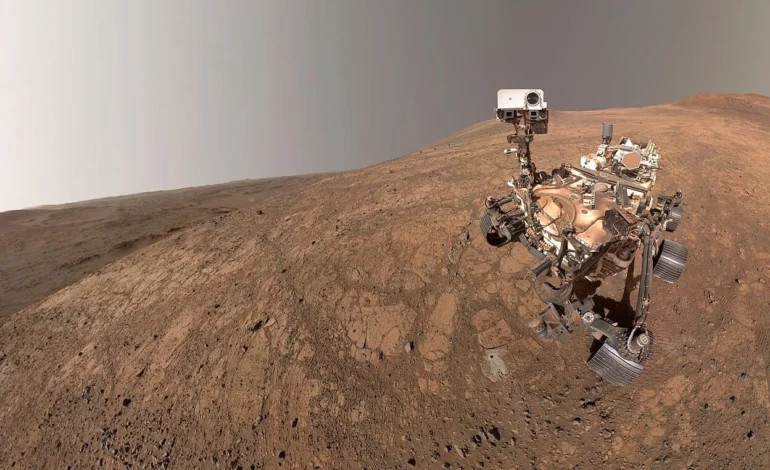
NASA’s Perseverance rover has been used to test a vision-based artificial intelligence (AI) system to map out a safe path along the Martian terrain, without the reliance on human route planners.
The rover has completed the first drive on another planet to be planned by AI. The milestone took place on the 8th and 10th December and was led by NASA’s Jet Propulsion Laboratory (JPL) in California. During the test, AI generative AI was used to choose waypoints for the Perseverance rover, a complicated planning task that is usually handled by human experts.
“This demonstration shows how far our capabilities have advanced and broadens how we will explore other worlds,” said NASA Administrator Jared Isaacman. “Autonomous technologies like this can help missions to operate more efficiently, respond to challenging terrain, and increase science return as distance from Earth grows. It’s a strong example of teams applying new technology carefully and responsibly in real operations.”
For the demonstration, the team used a type of generative AI called vision-language models to examine existing data from JPL’s surface mission dataset. The system then analysed the same images and information that humans would use, before identifying waypoint locations, allowing Perseverance to travel safely across the challenging terrain of Mars.
Routes for the rovers are difficult to plan because the planet is an average of 140 million miles (225 million kilometres) away from Earth. This creates a communication delay that makes real-time control impossible. For nearly thirty years, navigation of rovers relied on human drivers carefully studying the terrain and planning routes in advance.
Image: Courtesy NASA/JPL–Caltech
Stay tuned to EyeOnLondon for the latest news and expert opinions.
Follow us on:



Subscribe to our YouTube channel for the latest videos and updates!

We value your thoughts! Share your feedback and help us make EyeOnLondon even better!