New Year Listening: Recent Classical Recordings Reviewed

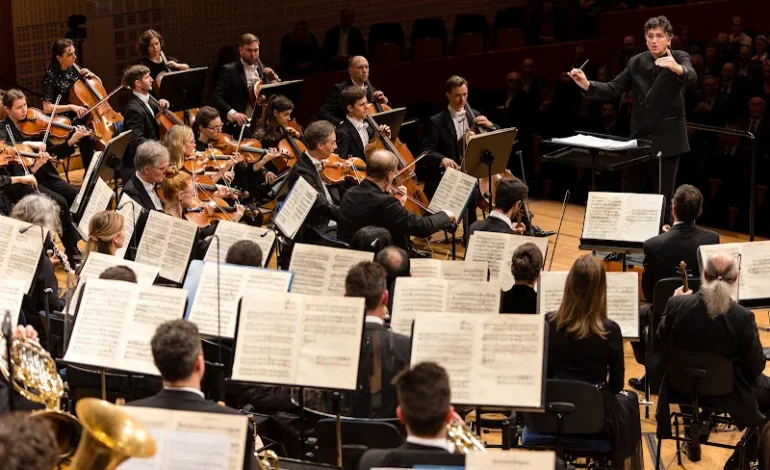
The start of the year often brings with it a quieter stretch in the concert calendar, and it is a time when recorded music can take on a particular importance. The January and February classical CD reviews gathered here range widely across repertoire and scale, but they are united by a concern for musical craft and for the institutions that sustain it. Choral music shaped by daily use, orchestral performances informed by long familiarity with the repertoire, and recordings that document a lifetime’s work all point to a shared understanding of music as something built patiently, over time. There is also an implicit reminder that such traditions depend on training, continuity and public support, and that decisions taken far from rehearsal rooms and choir stalls can have lasting consequences for the standards listeners value. Enjoy!
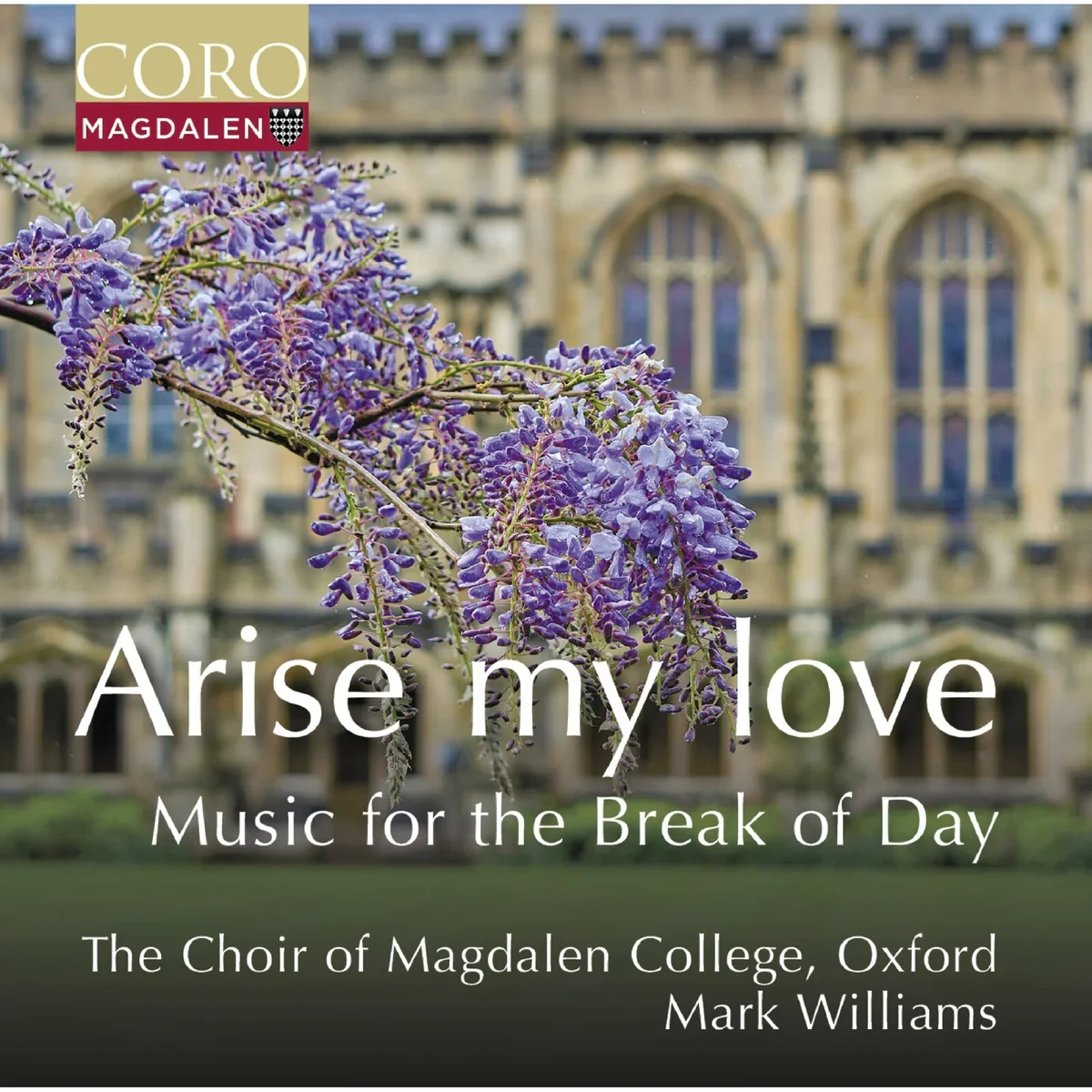
Arise My Love
Music for the break of day – CORO Magdalen COR16216
Various composers
Choir of Magdalen College, Oxford
Henry Morris & Alexander Pott Organists
Mark Williams Director
Somehow one always associates Magdalen with May Day morning up the tower but this album explores the music that the choir has been singing about mornings in the chapel since it was founded in 1480 – well, not quite back to then. The earliest piece is John Sheppard’s Haec Dies, which might date from his time at the college in the last years of Henry VIII.
From our own times there are miniatures from Jonathan Dove, Charlotte Bray, Gabriel Jackson and Cheryl Frances-Hoad. The title work for the album is James Whitbourn’s, who died in 2024 and studied at the college before directing the music next door at St Edmund Hall.
From the last century Britten’s Festival Te Deum, John Tavener’s As One Who Has Slept and Finzi’s Welcome, Sweet and Sacred Feast (at 7 minutes, the longest work on the disc) stand out. It is encouraging to conclude that the last 80 years has produced some of the most effective choral music of the ages, contrary to received opinion.
This is a supremely optimistic collection and achieves its aim of lifting the spirits in a gentle way. The singing throughout is excellent, with exceptionally clear and unified trebles. Where the 21st century choir differs from its ancestors is in the backgrounds of its choristers. The list includes a Brandukov, a Chowbury, a Dumitru, an Onobhayedo and a Shanmugaraj.
Put that in the pipe of those who complain choirs are not diverse! And while I’m at it, please, readers, campaign to have choir and cathedral schools exempted from the new VAT on private schools. It seems it has already succeeded in closing that of Exeter Cathedral School after 850 years. Meanwhile the Cathedral Music Trust is calling for UNESCO help in protecting choral music. As so often, the Treasury’s ill-thought decisions have unintended consequences.
Arts & Culture — More from EyeOnLondon
Recent classical music features and reviews, selected to keep you reading.
Winter Evenings: Classical CD Reviews
A seasonal selection of recordings chosen for attentive listening and musical substance.
Read the reviewMore Arts & Culture
Timeless Treasures: Classical Music Highlights
Recordings from December that reward return and reflect long musical traditions.
Read the reviewMore Arts & Culture
Classical Music Highlights by Simon Mundy
A considered look at recent recordings, written with clarity and critical judgement.
Read the reviewMore Arts & Culture
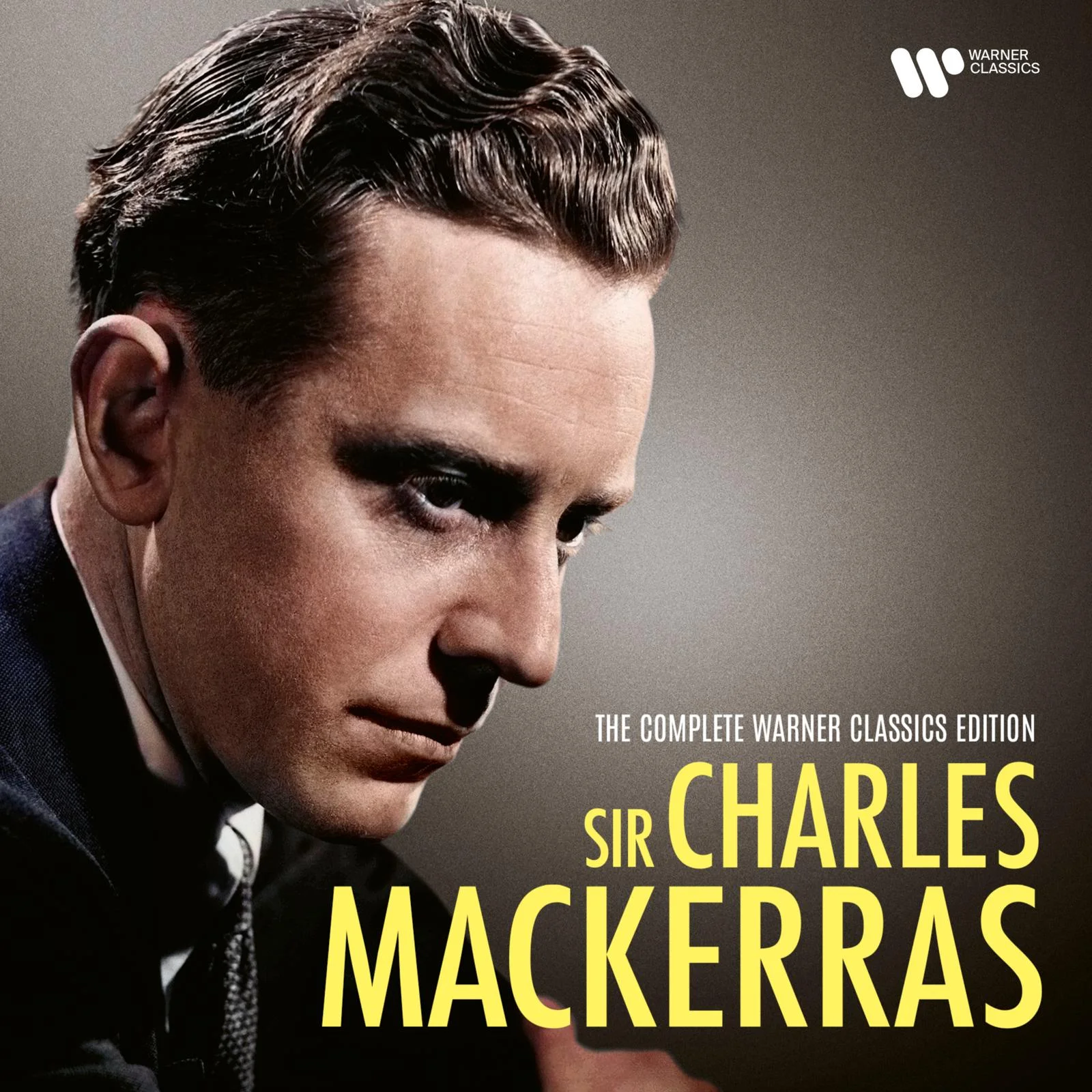
Sir Charles Mackerras
The Complete Warner Classics Edition – Warner Classics 5021732623560 (63 CDs)
Multiple orchestras and soloists
Sir Charles Mackerras Conductor
Mackerras would have been 100 last November and this enormous set is a fitting tribute to the Australian oboist who became one of the world’s best liked and most eclectic conductors. It opens with the fabulous flourish of a wind ensemble playing the original version of Handel’s Music for the Royal Fireworks in a ground-breaking recording from 1959.
It is followed by one of the finest non-period instrument recordings of the Messiah – that from 1967 with Elizabeth Harwood, Janet Baker (glorious), Paul Esswood, Robert Tear, Raimund Herincx and the English Chamber Orchestra – and finishes with a disc of comic songs called A Little Nonsense, sung by Owen Brannigan.
In between, though, we can cherish Mackerras’ sure touch in Beethoven and Schubert, Dvorak and Mozart. Musicians loved working with him because he came from their ranks, rehearsed like a partner, not a ‘maestro’, and found tempi that, while generally a little slower than is the fashion now, always felt natural.
His great love was for Czech music, after he had spent time in Prague playing the oboe in the Czech Philharmonic, but there is not a great deal of it in this box, for the simple reason that he recorded most of that repertoire for Decca and Philips. There are the last three Dvorak symphonies, Symphonic Variations, the Serenade for Strings and a few Janacek snippets.
Once the period instrument movement matured, Mackerras embraced it with enthusiasm. As Nigel Simeone says in his notes, Mackerras’ approach was ‘a blend of period consciousness and traditional classicism’. What joys there are in this sumptuous collection!
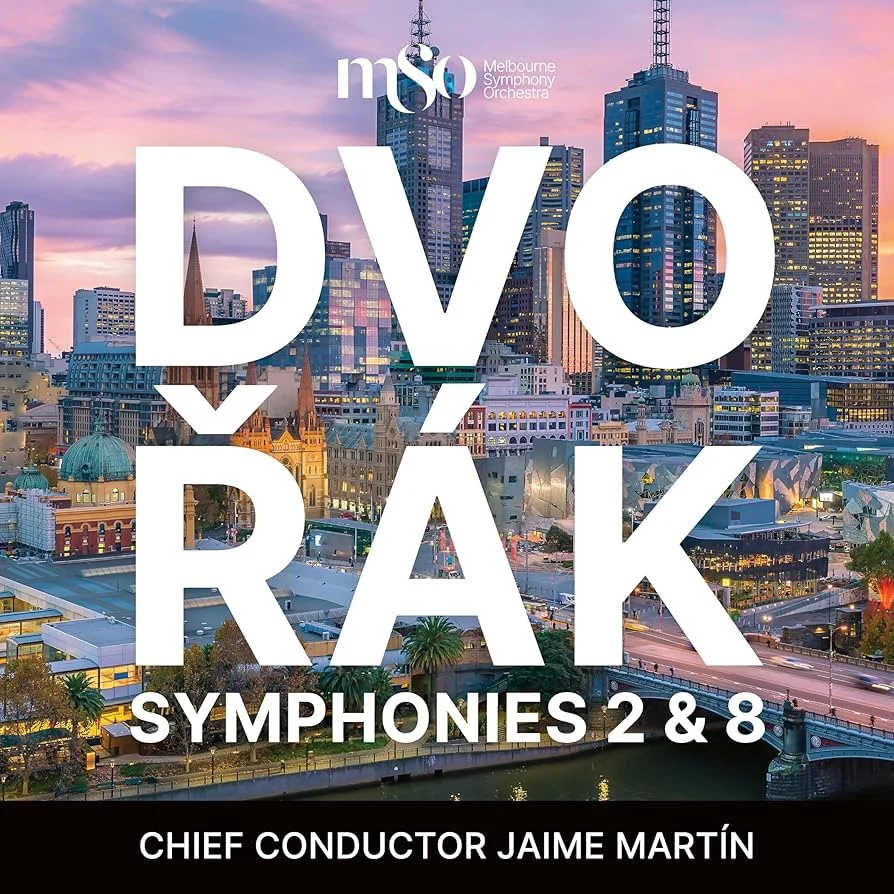
Dvorak
Symphonies 2 & 8 – MSO 00004 (2 CDs)
Melbourne Symphony Orchestra
Jaime Martin Conductor
From one wind player who became a notable Dvorak interpreter to another who has gone to Australia, unlike Mackerras who came from there. Jaime Martin spent many years as Principal Flute in London orchestras before taking up his post as Chief Conductor in Melbourne.
The series of Dvorak symphony recordings taken from his performances there are turning out to be some of the best this century. The latest were recorded in the MSO’s home, Hamer Hall, in June 2024 and March/April 2025.
The Second Symphony is especially worth having because it is rarely issued outside complete cycles. It is one of his most substantial, lasting almost an hour, compared to the 40 minute brevity of the Eighth. Critics in the last century were a bit snooty about the Second but it really is time to reassess it.
While it does not wallow so much in Czech folk music as some of his later work, Dvorak is closer to the mainstream of European symphony tradition here and the result is thoroughly satisfying. Jaime Martin gives the music the breathing space it needs, not trying to be over dramatic but letting it unfold with real dignity.
Read more classical music reviews and arts coverage on EyeOnLondon, where criticism and cultural context are given equal weight.
Follow us on:



Subscribe to our YouTube channel for the latest videos and updates!

We value your thoughts! Share your feedback and help us make EyeOnLondon even better!