Still standing – the Old Lady of Empire

Building the Bank: The Bank of England Museum
With a new major exhibition the Bank of England is celebrating what the historian Nikolaus Pevsner described in his discreet way as “the greatest architectural crime… of the 20th century”. Others may have other contenders, but what was done in the heart of commerce and the City rankled 100 years ago and rankles still.
For to build Herbert Baker’s monumental grey slab in Threadneedle Street the much-loved life’s work of a much-loved English architect had to be removed. This was the Bank of England, of which John Soane was the architect for 40 years and into which he threw all his neo-classical romanticism. The process of expunging and building Baker’s replacement was begun in 1925 and took till 1938 to complete.
Arts & Culture — Latest from EyeOnLondon
Explore features, restorations and major exhibitions shaping the cultural conversation.
Queen Camilla’s Royal Family Order
What the new order means for royal portraiture, protocol and tradition.
Read the storyMore Arts & Culture
Hogarth’s ‘The Pool at Bethesda’ restored
An 18th-century canvas returns to view after careful conservation work.
Read the storyMore Arts & Culture
MoMA’s 2026 Duchamp retrospective
A landmark show reuniting The Large Glass and Étant donnés.
Read the storyMore Arts & Culture
Herbert Baker has become more of a villain because he was the protégé in South Africa of Cecil Rhodes, the progenitor of apartheid, and together they devised the public buildings that celebrated the “Union of South Africa” between the British and the Boers. And with his collaboration with Edwin Lutyens to create architectural New Delhi, Baker became the architect of empire. There was never a more opulent statement of empire than the bank he built for it.
However, the demonisation of Baker, says the exhibition, might be mis-placed. He took on a commission, which he beat Lutyens to, destroying their friendship, that was strewn with provisos, conditions and impossibilities. Demolition and new build took place around the staff for 13 years and they had to be shuffled around as space became available while the bank remained in full operation. Out of the maelstrom of complications he eventually developed a building that has beauty (thanks partly to his use of craftsmen and artists to give personality to his own classical instincts) that was as practicality. It is now a Grade I listed monument.
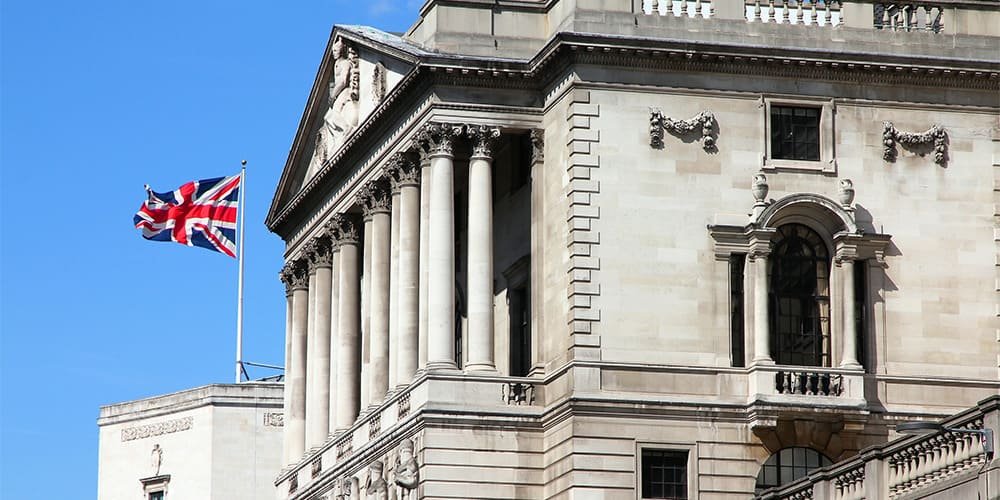
Marking the centenary of the start of the masterpiece the Bank of England has opened Building the Bank and it will run in the bank’s own museum until the spring of 2027.
The bank was formed in 1694 when William III needed to repair a navy that was all but destroyed by the French at the Battle of Beachy Head, with a bankrupt exchequer and an impossibly low credit rating. He persuaded independent bankers to get together in a “public transferrable Fund of interest”, established by Parliament to lend money to the government and give interest to subscribers. In 11 days £1.2m, worth trillions now, was raised.
Its first home was in borrowed rooms in the Mercers’ Hall but in 1734 in Threadneedle Street a rather patrician villa was constructed. Through the 18th century it acquired parcels of land surrounding it under the architect Robert Taylor who died in 1788 and was succeeded by John Soane, the enfant terrible of English architecture, a devotee of Palladian principles but with romantic flourishes of soaring arches, gravely watching caryatids, wide floor space, even a recreation of the Temple of Vesta in the Tivoli Gardens complete. It took him all of his 40 years in charge to make his changes, and they weren’t completed then. “If Soane had had the advantage of being able to clear the site, he might well have come up with similar solution to Baker’s” says the exhibition’s curator, Jenni Adam. Barely a dozen examples of Soane’s work have survived.
The bank continued to expand and by the end of the First World War the Soane building had gradually expanded in his time to three floors and had not changed in appearance since his death in the 1830 and by it was no longer fit for purpose. In 1914 there were about 1,200 staff on the premises; by 1918 with the introduction of war bonds there were 4,000 (there are now 5,000). In 1918 there were three floors, now there are 11, three of them underground.
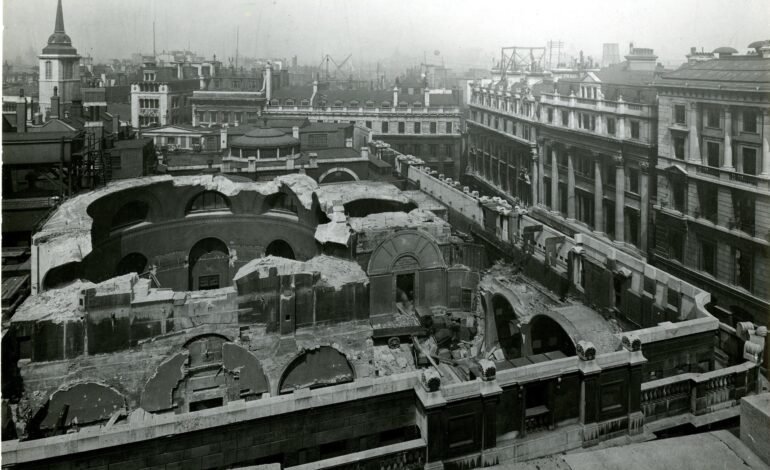
Building the Bank features black-and-white photographs of the demolition of Soane’s building, some never seen in public before, and details of the Roman and medieval remains found during the preparation of the site. The Museum Rotunda is an exact reproduction of Soane’s Stock Office from 1792.

The exhibition also relates the story of Kenneth Grahame, author of the children’s classic A Wind in the Willows. He was a senior clerk in the Bank of England when he was confronted by a demented man who brandished a gun and took a shot at the writer. The bullet missed but Grahame was permanently affected by the experience and resigned from the bank four years later.
“The architectural policy of the Bank… was to preserve continuity in change, a sense of permanence in progress”, Baker wrote in his 1944 autobiography, published two years before this death, there is homage to Soane in the Baker vision, he even kept, or remade, Soane’s strange Tivoli evocation. He recruited craftsmen, including the Russian artist Boris Anrep to make the mosaic floors. Portraits were commissioned of staff members, from bullion carriers to directors. The sculptor Charles Wheeler made not only sculptures but the big bronze doors for which he had to get a bigger studio and even the doorknobs. He sculpted the figure of Britannia that adorns the bank’s capital.
With today’s hindsight, Herbert Baker looks like a flag bearer for imperial power and its noxious philosophies of racism, sexism and nationalist arrogance, and as a man of his times that may be true. But he was also an artist who had a vision that did not exclude the ingenuity of the past but included the creativity at handicraft level of his present. And these post-empire days, the Old Lady is still living comfortably in that vision.
For more features exploring London’s history and cultural heritage, follow EyeOnLondon for insightful storytelling you can trust.
[Image Credit | Edie]
Building the Bank — Exhibition Details
Bank of England Museum, Bartholomew Lane, London EC2R 8AH
Dates: 16 September 2025 – Spring 2027 • Admission: Free (no booking required)
Opening hours: Mon–Fri 10:00–17:00 (last entry 16:30). Museum Lates every third Thursday until 20:00 (last entry 19:30). Closed weekends and bank holidays.
Curator-led lunchtime tours at 12:00 (free; booking required).
Exhibition page — Building the Bank
Follow us on:



Subscribe to our YouTube channel for the latest videos and updates!

We value your thoughts! Share your feedback and help us make EyeOnLondon even better!