The singer with millions of streams who may not exist

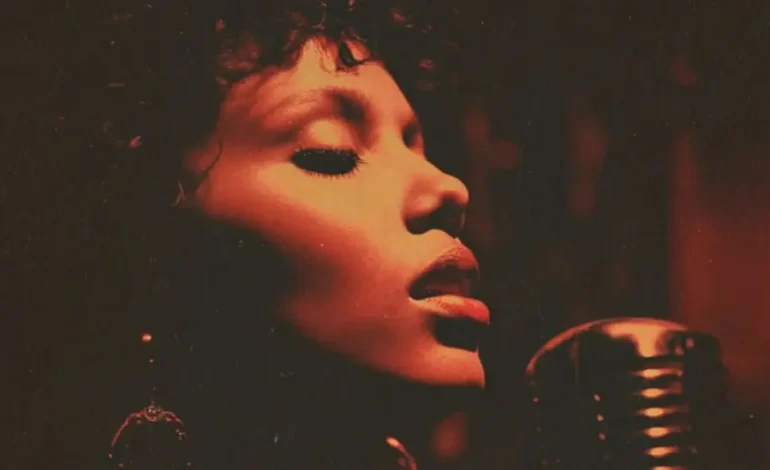
For a few weeks this winter, AI artist Sienna Rose appeared to be everywhere. Three of her dusky, jazz-leaning soul tracks climbed into Spotify’s Viral Top 50, led by Into the Blue, a languid ballad streamed more than five million times. Industry watchers began to whisper about a breakout moment. Then a more awkward question surfaced: was she real at all?
Streaming platform Deezer believes not. The company says many of Rose’s tracks have been flagged by its detection systems as computer-generated, raising the prospect that one of the most talked-about new voices of the season may never have stepped into a studio, let alone onto a stage.
More from Arts & Culture
Features and guides exploring music, film and cultural life in London and beyond.
Inside David Bowie’s childhood home in Bromley
A look at the suburban house where Bowie grew up and the early influences that shaped his life.
Read the articleArts & Culture
Golden Globes 2026 UK viewing guide
How to watch the ceremony from the UK, including timings, channels and what to expect.
Read the guideFilm & TV
Winter evenings: classical CD reviews
Thoughtful listening for the colder months, with recent classical releases reviewed.
Read the reviewsMusic
The signs were there, if you looked closely
Rose has no live history, no verified social media presence and no interviews. In just over two months, between late September and early December, she uploaded at least 45 songs to streaming services. Even Prince, at his most prolific, might have paused for breath.
Her now-deactivated Instagram account offered another clue. The images were eerily consistent: softly lit headshots with a gauzy finish more commonly associated with image generators than photographers. To casual listeners, the music itself seemed convincing at first. The songs sit comfortably alongside artists such as Norah Jones or Alicia Keys, built around brushed drums, gentle guitar lines and a smooth, unbroken vocal.
Yet attentive ears began to pick up oddities. A faint hiss runs through several tracks, including Under the Rain and Breathe Again. According to Deezer’s research team, this is a known artefact of certain music-generation tools, which begin with white noise and gradually shape it into something resembling a finished recording.
“When the software adds all the layers and instruments, it introduces errors,” said Gabriel Meseguer-Brocal, a senior research scientist at Deezer. “They are not perceptual in the way a human mistake is, but they are easy to spot mathematically. Those errors act like a fingerprint.”
Fans notice the uncanny quality
Outside the labs, listeners were drawing their own conclusions. TikTok critic Elosi57 described an “uncanny valley” effect. “I liked it, but something felt off,” they said, explaining how a closer look at Rose’s profile led them to suspect artificial creation.
Others were slower to spot the difference. One X user wrote that Spotify recommended Rose after they had been listening to Olivia Dean. “It took me a few songs to realise she’s AI,” they said, noting a similarity in tone that felt oddly generic. Broadcaster Gemma Cairney was blunter on Radio 4: “Is there just some of the soul in the soul missing?”
Still, the illusion held long enough to catch the attention of major figures. Selena Gomez briefly used one of Rose’s tracks as background music on Instagram during Golden Globes weekend, before removing it as questions about the singer’s identity spread.
The economics of a machine-made hit
If Rose is indeed synthetic, the financial logic is clear. Launching an AI act costs little, yet her catalogue is estimated to be earning around £2,000 a week in royalties. By contrast, K-pop labels can spend close to $1m a year developing a single group member.
The situation becomes murkier when labels enter the picture. Some of Rose’s songs are credited to the US indie label Broke, known for nurturing viral acts, although she does not appear on its official roster. Another imprint, Nostalgic Records, lists her as a London-based artist and describes her as “a storyteller of the heart”. Neither has publicly clarified how the music was made.
The wider context is shifting fast. Deezer says roughly a third of new uploads to its service are now AI-generated, a figure that has risen sharply in the past 18 months. Some platforms are taking a harder line. You can read more about recent policy changes in the industry on Bandcamp’s announcement on AI-generated music, which outlines its decision to ban such material outright.
Spotify, by contrast, argues that the boundary between human and machine-made music is increasingly blurred. “It’s not always possible to draw a simple line between ‘AI’ and ‘non-AI’ music,” a spokesperson said, adding that the platform does not promote or penalise tracks based on how they are created.
A growing cultural backlash
The unease is not limited to technologists. Last year, artists including Paul McCartney, Kate Bush and Damon Albarn released a silent album to protest against AI models trained on copyrighted work without permission. At the Ivor Novello Awards, Raye argued that listeners would continue to value human expression. “I write because I’m trying to tell my story,” she said. “That’s not something an algorithm carries.”
For now, Sienna Rose remains a question mark. She could yet turn out to be a private musician operating under a pseudonym, although the evidence is thin. More likely, she is a glimpse of what lies ahead: convincing, inexpensive and unsettlingly efficient. The real test may not be whether audiences can tell the difference, but how much it matters once they do.
For more stories examining how technology is reshaping music, media and culture, follow EyeOnLondon for independent and thoughtful coverage. We welcome your views in the comments.
[Image Credit | Sienna Rose]
Follow us on:



Subscribe to our YouTube channel for the latest videos and updates!

We value your thoughts! Share your feedback and help us make EyeOnLondon even better!