Small Businesses Fear More Pain Ahead of Autumn Budget

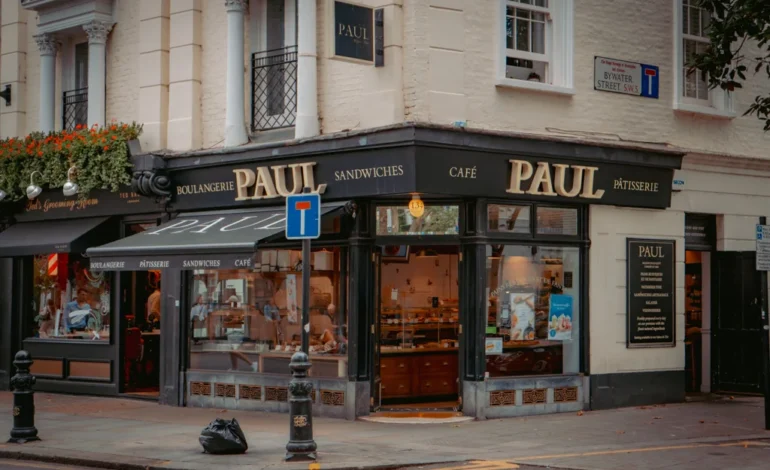
High Street owners across Britain say small business fears are mounting ahead of the government’s next Budget, warning that another round of tax and cost increases could be “the final straw” for many employers.
“It was a kick in the teeth,” said Katya Milavic-Davies, owner of four Myla and Davis hair salons, the restaurant Llewelyn’s, and café Lulus in Herne Hill, south London. She said she had to raise turnover by half a million pounds to absorb higher National Insurance contributions and minimum wage rises introduced after last autumn’s Budget.
London News — Latest from EyeOnLondon
Explore today’s headlines and keep reading for context, analysis and updates.
Liverpool Street redevelopment delayed again
Fresh details added to the planning file push back the decision on one of London’s busiest stations.
Read the storyMore London News
Paddock School SEND expansion in Wandsworth
Plans to create more specialist places for local pupils with additional needs move a step forward.
Read the updateMore London News
EV Congestion Charge exemption to end in New Year
Drivers of electric vehicles will join the main scheme as Transport for London changes the rules.
Read the explainerMore London News
“We’ve obviously had to pass on those costs and try and put up our prices as much as we can,” she said, “but there is a ceiling and we’re seeing the strain.”
Razor-thin margins and rising fear
Figures from the Federation of Small Businesses show nearly one in three firms expects to shrink, sell, or close within the next 12 months. The organisation is urging Chancellor Rachel Reeves to cut the tax burden and employment costs to help small companies stay afloat.
A survey by Novuna Business Finance and YouGov found that 86 per cent of small firms fear the forthcoming Budget could harm their growth. Taxation and fuel duty topped employers’ concerns, while many cited uncertainty and weak consumer demand as additional pressures.
“It’s hard not to feel as though we, as employers, are not being treated as working people,” said Ms Milavic-Davies, adding that there is “a misunderstanding about employers having bottomless reserves.” She described her sectors, hospitality and personal care, as operating on “razor-thin margins.”
Industry body UK Hospitality estimates that more than 100,000 jobs have been lost since last year’s Budget. Chief executive Allen Simpson said: “Unless we see changes on the 26 November, we will see more jobs lost and more businesses close. We need a Budget that is equally positive for hospitality to repair the damage.”
Simpson urged government to consider cutting business rates, reducing National Insurance contributions and lowering VAT to bring the UK closer to European averages. Ireland, for instance, has confirmed a hospitality VAT cut from 13.5 per cent to 9 per cent from July 2026, as outlined by Ireland’s Department of Finance.
“Like knowing you have a dentist appointment”
Charlie Gilkes, co-founder of the Inception Group, which runs themed bars across London, said this year’s Budget feels “like knowing you have an appointment at the dentist, you know it’s going to hurt and you just want to get it over with.”
Mr Gilkes opened Bunga 90, a 90s-themed bar in Covent Garden, last September and had originally planned two or three more venues. “Before the last Budget we had plans to open two to three,” he said. “Each site we open is creating seven figures of revenue for the Treasury. If they do help us, we can help with the growth agenda, but if it’s anything like last year, it’ll do the exact opposite.”
Local dynamism at risk
Ms Milavic-Davies believes the next Budget must adopt “a more sophisticated tax system” that recognises the role of employment-heavy businesses in sustaining high streets. “It’s only by looking after these industries that you’re able to maintain local dynamism and keep shops open,” she said.
A government spokesperson responded that pubs, restaurants, and cafés “are vital to local communities,” adding that recent policies have aimed to ease costs by lowering business rates, simplifying licensing, and extending support for alfresco dining.
For more stories on London’s business, finance and economy, follow EyeOnLondon for informed and independent reporting.
This article draws on material first published by the BBC and has been independently edited and developed by EyeOnLondon.
Follow us on:



Subscribe to our YouTube channel for the latest videos and updates!

We value your thoughts! Share your feedback and help us make EyeOnLondon even better!