SETI followed pulsar to learn how it twinkles

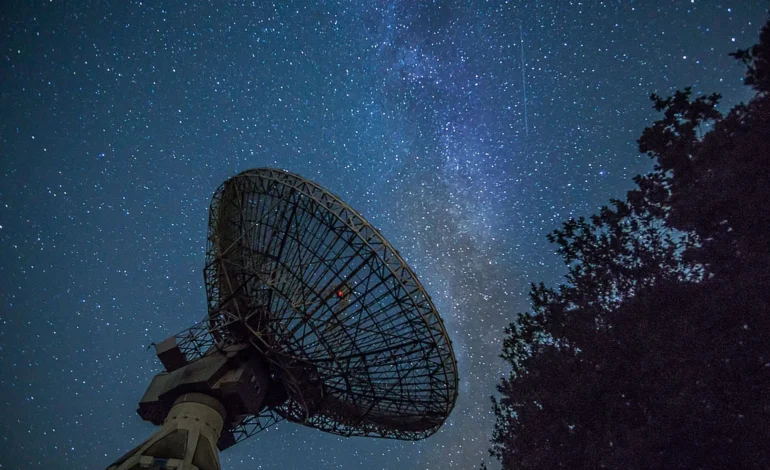
The Search for Extra Terrestrial Intelligence (SETI) Institute followed a pulsar in an effort to understand how its radio signal appears to “twinkle” as it travels through clouds of gas on its way to us.
Using the Allen Telescope Array (ATA), the team collected data from the pulsar, PSR J0332+5434 (also called B0329+54), from across different radio frequencies, from 900 to 1956 MHz. They detected slow but pronounced changes in its “twinkling behaviour” known as scintillation.
A pulsar is a dense, rapidly spinning leftover of a massive star that exploded a long time ago. As it rotates, it emits radio flashes at high-speed intervals, allowing astronomers to use powerful radio telescopes to measure the exact arrival time of its pulses.
“Pulsars are wonderful tools that can teach us much about the universe and our own stellar neighborhood,” said project leader Grayce Brown, a SETI Institute intern. “Results like these help not just pulsar science, but other fields of astronomy as well, including SETI.”
All radio signals that pass through interstellar space go through scintillation. For researchers at SETI, it is essential to understand this effect, allowing them to distinguish between natural cosmic signals and radio interference from our own technology.
Stay tuned to EyeOnLondon for the latest news and expert opinions.
Follow us on:



Subscribe to our YouTube channel for the latest videos and updates!

We value your thoughts! Share your feedback and help us make EyeOnLondon even better!