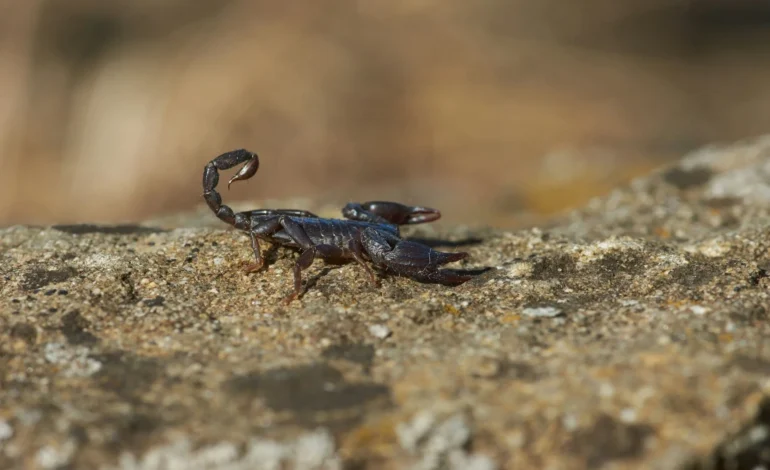
The venom of a scorpion species from the Amazon could contain a compound that can help treat breast cancer, a study has found. Researchers from the University of São Paulo’s Ribeirão Preto School of Pharmaceutical Sciences have focused on a molecule in the toxin Brotheas amazonicus, which appeared to attack breast cancer cells in a similar manner to chemotherapy.
The research came via a collaboration from National Institute for Amazonian Research (INPA) and the Amazonas State University (UEA). The findings were presented at FAPESP Week France in the Occitanie region of southern France.
“Through bioprospecting, we were able to identify a molecule in the species of this Amazonian scorpion that is similar to that found in the venoms of other scorpions and that acts against breast cancer cells,” said Eliane Candiani Arantes, a professor at FCFRP-USP and the coordinator of the project. Scientists had worked to clone and express bioactive molecules such has proteins from the venom of scorpions and rattlesnakes.
One outcome of this research is a patented fibrin sealant which is described as a “biological glue” that is produced from enzymes extracted from snake venom. When applied, along with cryoprecipitate enriched with fibrinogen from buffalo, cattle, or sheep these components resemble the body’s natural clotting and tissue repair process.
The sealant is also being studied for use in nerve repair, bone healing, and restoring movement after a spinal cord injury. It is going through the final stage of clinical trials before approval.
Stay tuned to EyeOnLondon for the latest news and expert opinions.
Follow us on:



Subscribe to our YouTube channel for the latest videos and updates!

We value your thoughts! Share your feedback and help us make EyeOnLondon even better!