Sauropod trackway dinosaurs may have been limping

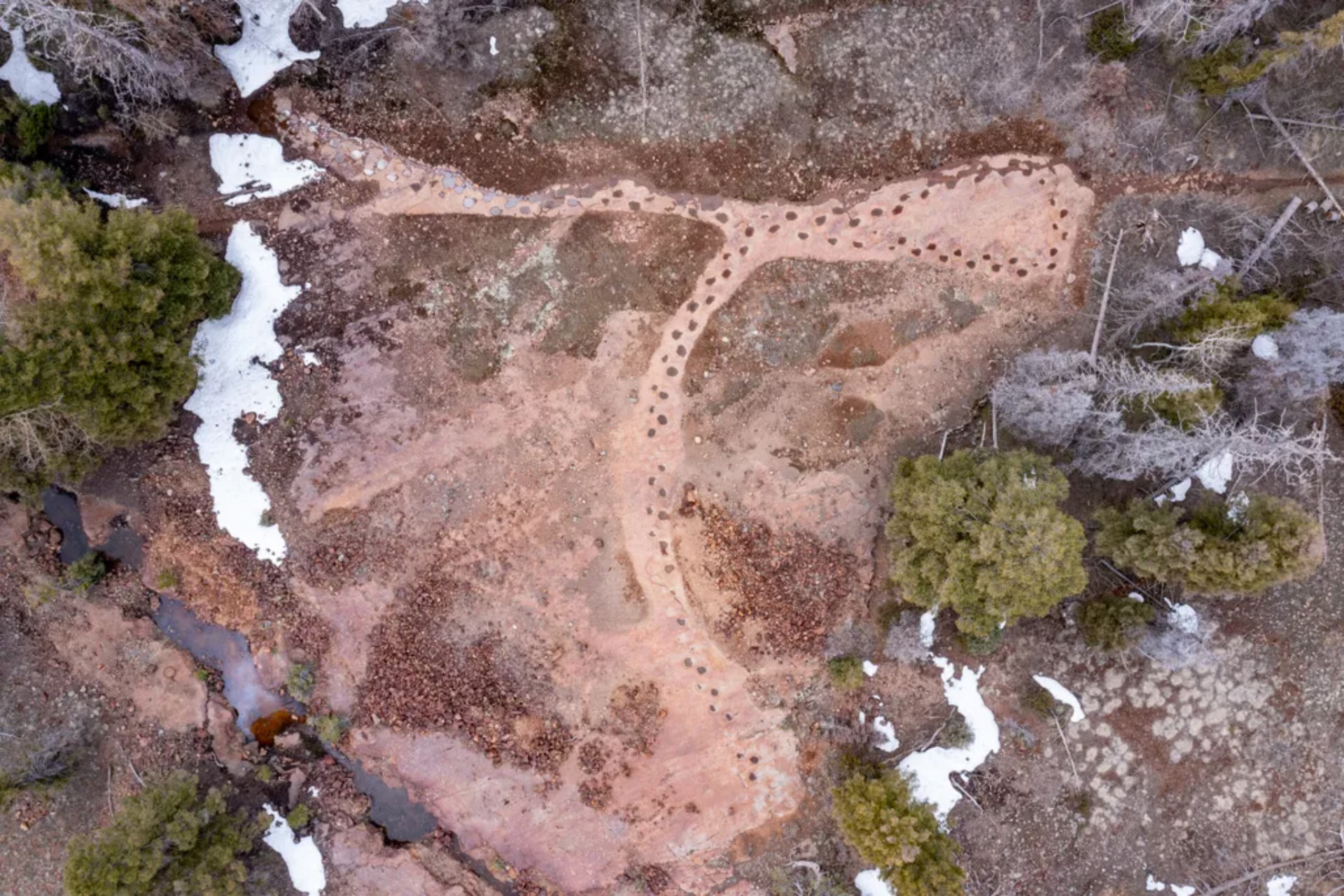
Palaeontologists have studied an especially long 150-million-year-old sauropod trackway at the West Gold Hill Dinosaur Tracksite in Colorado. The results show that the giant long-necked dinosaurs may have been limping. The team published their paper in the journal Geomatics.
Anthony Romilo, a palaeontologist from the University of Queensland, along with his colleagues, analysed over 130 footprints along the 95.5 metre track laid down by the dinosaurs.
“This was left in the Late Jurassic when long-necked dinosaurs such as Diplodocus and Camarasaurus roamed North America,” he said. “This trackway is unique because it is a complete loop. While we may never know why this dinosaur curved back on itself, the trackway preserves an extremely rare chance to study how a giant sauropod handled a tight, looping turn before resuming its original direction of travel.”
San Diego Natural History Museum palaeontologist Paul Murphy said that the “scale of the West Gold Hill Dinosaur Tracksite required a new approach.”
“It has been challenging to document these footprints from the ground because of the size of the trackway,” he said. “We used drones to capture the entire trackway in high resolution. With these images we generated a detailed 3D model, which could then be digitally analyzed in the lab at millimeter-scale accuracy.”
The virtual model recreated the movement of the sauropod group along the entire trackway.
“It was clear from the start that this animal began walking toward the northeast, completed a full loop, and then finished facing the same direction again,” Dr. Romilio said. “Within that loop we found subtle, yet consistent, clues to its behaviour.”
One clear pattern, he said, was a variation in width between left and right footprints, “shifting from quite narrow to distinctly wide,” he said.
“This shift from narrow to wide step placement shows that footprint width can change naturally as a dinosaur moves, meaning short trackway segments with seemingly consistent widths may give a misleading picture of its usual walking style.”
A “small but persistent” difference between left and right step lengths, around 10cm (4 inches) was also detected. “Whether that reflects a limp or simply a preference for one side is hard to say,” he said. “There are many long dinosaur trackways around the world where this method could be applied to extract behavioural information that was previously inaccessible.”
Image: Gary Todd
Stay tuned to EyeOnLondon for the latest news and expert opinions.
Follow us on:



Subscribe to our YouTube channel for the latest videos and updates!

We value your thoughts! Share your feedback and help us make EyeOnLondon even better!