Northern Lights: Where to watch the aurora from London to the Highlands

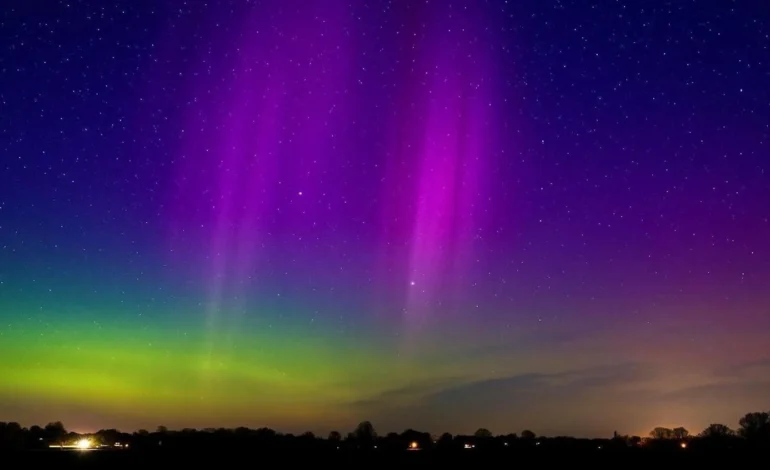
The Northern Lights could appear in the skies of the UK tonight, with a strong geomagnetic storm forecast to make the aurora visible much farther south than usual.
The Met Office says the vivid display may be seen across Scotland, Northern Ireland, and parts of northern and central England. Even Wales and London could catch a faint glimpse if skies remain clear.
Science & Environment from EyeOnLondon
Latest discoveries and climate stories to help readers stay informed.
Universe slowdown challenges dark energy theory
New work on the pace of expansion could reshape what we think is driving the universe.
Read this science storyUK & World News
Great Barrier Reef can recover if warming stays below 2C
Researchers say recovery is still possible if global action keeps temperatures in check.
Read this environment storyUK & World News
Exoplanet temperature mapped by JWST
A detailed look at a distant world that shows how far space telescopes have come.
Read this space storyUK & World News
The spectacle, known as the aurora borealis, occurs when charged particles from the sun collide with gases in the Earth’s atmosphere, creating streaks of colour that ripple across the night sky.
“It’s an extraordinary reminder of how alive our planet’s connection to the sun really is,” said one stargazer preparing to travel north for the weekend.
Best places to see the Northern Lights in the UK
Scotland remains the best place for viewing, particularly in the Highlands, the Shetland Islands and the Outer Hebrides, where low light pollution and wide northern horizons provide ideal conditions.
Galloway Forest Park, one of the UK’s designated Dark Sky Parks, also offers exceptional visibility.
In Northern England, Northumberland National Park and parts of the Lake District have reported past sightings. The Yorkshire Dales, especially around Hawes and Malham, also give promising vantage points on clear nights.
Wales can occasionally see the aurora from Brecon Beacons National Park, though displays are rare and depend heavily on sky clarity.
In London, visibility is limited but not impossible. Elevated northern viewpoints such as Hampstead Heath or Primrose Hill offer the best chance of spotting faint bands of colour if the activity extends southward.
How to improve your chances
For the best chance of success, find a dark, open area facing north and allow your eyes to adjust to the dark for at least 15 minutes. Avoid using your phone torch or standing near streetlights.
Monitoring services such as AuroraWatch UK provide real-time alerts when auroral activity increases. Clear skies, low moonlight and patience remain the key ingredients.
“You don’t need to travel to Iceland or Norway,” said an astronomy guide. “On the right night, Britain can give you a front-row seat.”
For more stories exploring life across the UK and the natural wonders beyond London, follow EyeOnLondon for original features and everyday insights from across Britain.
[Image Credit | BBC]
Follow us on:



Subscribe to our YouTube channel for the latest videos and updates!

We value your thoughts! Share your feedback and help us make EyeOnLondon even better!