Hospital infections trigger Nipah virus alert in India

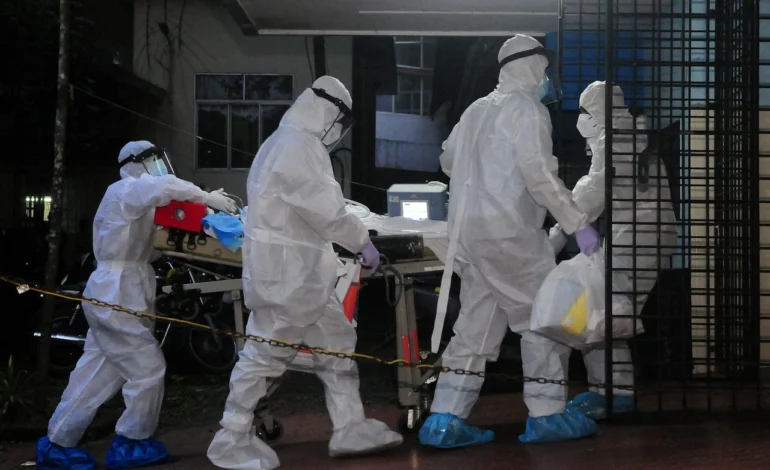
A Nipah virus alert in India has been issued after two nurses at a private hospital near Kolkata were confirmed to have contracted the rare and often fatal bat-borne infection, triggering quarantine measures and heightened surveillance across several states.
The cases were identified at Narayana Multispeciality Hospital in Barasat, around 16 miles from central Kolkata. Both nurses had worked the same shifts late last month and were admitted to intensive care after developing high fever and severe respiratory symptoms. One of them remains in critical condition.
International News — More from EyeOnLondon
Global stories shaping lives far beyond their borders.
New Zealand landslide leaves campers missing
Emergency crews search near Mount Maunganui after a sudden landslide traps holidaymakers.
Read the storyMore International News
Carolinas and Texas brace for major storm
Authorities warn of flooding and infrastructure damage as extreme weather moves inland.
Read the storyMore International News
Renewed concerns over Trump’s health
Public appearances prompt questions as the US election campaign gathers pace.
Read the storyMore International News
West Bengal’s principal secretary for health and family welfare, Narayan Swaroop Nigam, confirmed the infections and said authorities were treating the situation with urgency. “Two nurses at a private hospital are infected with Nipah virus, and one of them is in critical condition,” he said.
Health officials believe the nurses were exposed while caring for a patient who later died before testing could be carried out. That patient is now being treated as the suspected index case, though investigations are continuing to establish how the virus entered the hospital setting.
Contact tracing has so far identified around 180 people who may have been exposed. Twenty of them have been placed in quarantine as a precaution. All have tested negative and remain without symptoms, though further testing will be carried out before the end of the 21-day isolation period.
The Indian Ministry of Health and Family Welfare has responded by issuing a nationwide advisory, asking states to strengthen monitoring and detection systems and to prepare hospitals for rapid isolation should further cases emerge.
Nipah virus infections are rare but highly dangerous. The disease is carried by fruit bats and can spread to humans through contaminated food or contact with infected animals. Once established in people, it can also pass from person to person through respiratory droplets and bodily fluids, making hospitals particularly vulnerable during outbreaks.
The virus has a fatality rate that can reach 75 per cent. Early symptoms often resemble common viral illness, including fever, vomiting and fatigue, before progressing to respiratory failure or inflammation of the brain. In some cases, serious neurological complications can emerge months or even years later.
Several states have now instructed hospitals to intensify screening for Acute Encephalitis Syndrome, a broad clinical diagnosis that can mask underlying Nipah infections. In Tamil Nadu, health officials warned clinicians to monitor patients with encephalitis symptoms who have travelled from or had contact with people from West Bengal.
Ali Althaf, a senior health official in Kerala who has studied previous outbreaks, said that missed or delayed recognition posed serious risks. “We have repeatedly seen human-to-human transmission occurring within hospital settings,” he said. “When cases are not recognised early, healthcare workers are placed at the highest risk.”
A senior official involved in West Bengal’s surveillance programme rejected suggestions of misdiagnosis but acknowledged the difficulty of early detection. “It is more accurate to say this was a missed diagnosis,” he said, adding that testing criteria were being widened to ensure clinicians knew when to suspect Nipah and request specialist panels.
Public health guidance on Nipah virus transmission and prevention is published by the World Health Organization, which has previously warned that sporadic outbreaks are likely to continue in regions where bat-to-human transmission occurs.
For more independent reporting on global health stories with relevance for UK readers, follow EyeOnLondon. We welcome informed discussion in the comments.
[Image Credit | CK Thanseer/REUTERS]
Follow us on:



Subscribe to our YouTube channel for the latest videos and updates!

We value your thoughts! Share your feedback and help us make EyeOnLondon even better!