London’s Leaders Call for Unity at the Start of 2026

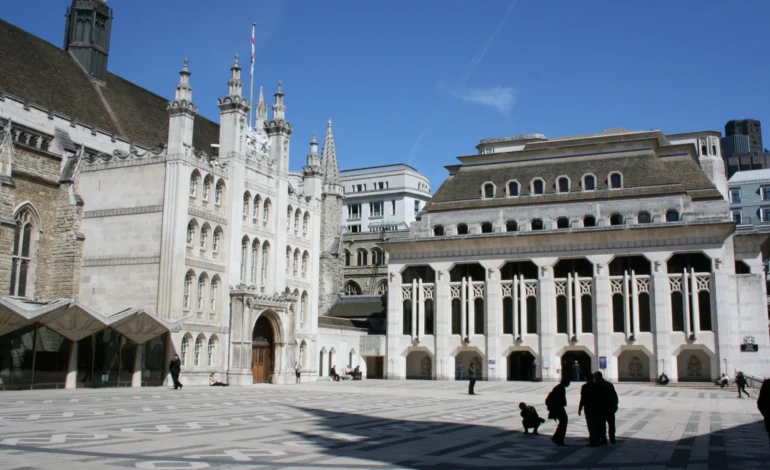
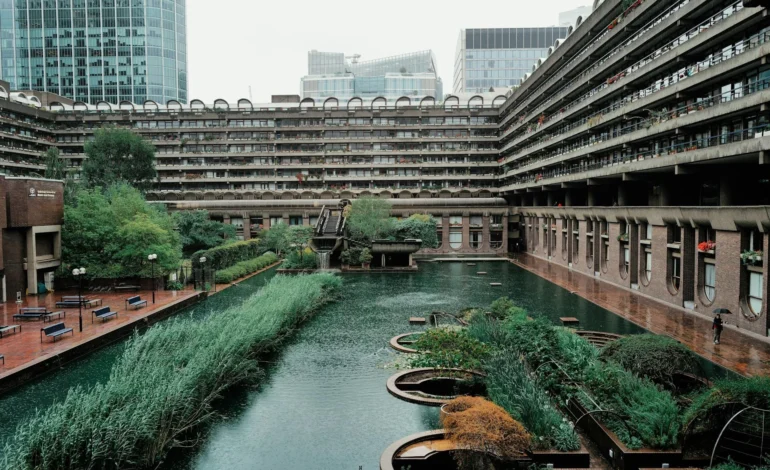
At the annual London Government Dinner, held on 15th January 2026, the Lady Mayor of the City of London used one of the capital’s most traditional gatherings to deliver a quietly pointed message. London’s future prosperity, she argued, depends less on rivalry between institutions and more on trust, collaboration and shared purpose across the whole city.
Speaking alongside the Mayor of London, Sadiq Khan, and the Chair of London Councils, Claire Holland, Dame Susan Langley framed the evening not as ceremony, but as a moment to reset London’s tone at the beginning of the year.
More City of London Stories
Reporting from the Square Mile, covering finance, policy and the institutions that shape the City.
UK and EU collaboration on defence finance
How renewed cooperation is positioning the City of London at the centre of European defence funding.
Read the articleCity of London News
London and US financial ties strengthened by Washington appointment
A closer look at the City’s evolving relationship with Washington and what it means for global finance.
Read the articleCity of London News
Salisbury Square police headquarters reaches topping-out milestone
What the new City of London Police headquarters means for security, investment and the Square Mile.
Read the articleCity of London News
A City Built on Trust and Connection
Addressing political and business leaders, the Lady Mayor described the City as a place where agreements are respected and institutions trusted. In uncertain global conditions, she suggested, that reputation remains one of London’s greatest assets.
“For centuries, the City has been a place where deals are made and honoured,” she said. “People do business here because they trust and respect the system. Contracts are enforced. Disputes are resolved. And in an increasingly uncertain time, that is priceless.”
Yet she was clear that the Square Mile does not thrive in isolation. The City’s talent, she noted, lives across the capital, from Haringey to Hammersmith, Croydon to Camden. London’s strength lies in how its institutions, boroughs and communities are connected, not divided.
“In a competitive, turbulent world, fragmentation is weakness, togetherness is strength,” she told guests.
Business, AI and the Shape of London’s Economy
The Mayor of London echoed the call for partnership, placing particular emphasis on the pace of technological change and the challenge it poses to the capital’s workforce.
“London is the best city for business in the world,” Sir Sadiq Khan said, describing the capital as an “economic powerhouse” driven by creativity and innovation. But he warned that the impact of artificial intelligence on jobs would be “nothing short of colossal”, arguing that London must act together to future-proof both its economy and its people.
The focus on collaboration extended beyond City Hall. Councillor Claire Holland highlighted the role of London Councils in building cross-party consensus, pointing to joint initiatives between boroughs and the Greater London Authority, from the London Growth Plan to programmes such as Warmer Homes London, aimed at improving energy efficiency and tackling fuel poverty.
Policing, Safety and Confidence
Security and confidence were also central themes of the evening. The Lady Mayor praised the work of the City of London Police, not only for keeping the Square Mile safe, but for its national leadership on fraud.
With an effective crime rate of just 0.01 per capita per year, she noted, the City remains one of the safest places in the country, a fact that underpins investment far beyond its boundaries.
Culture as a Shared Endeavour
Looking ahead, Dame Susan Langley pointed to culture as a tangible example of partnership in action. The new London Museum, backed by more than £400 million from the City Corporation and the Mayor of London, is due to open later this year. It will be one of Europe’s largest cultural developments, telling the story of the capital as a whole rather than any single district.
“The City has survived for nearly two thousand years not because it’s stayed the same,” she concluded, “but because it’s adapted, again and again, to new realities.”
As London moves deeper into 2026, the message from the Guildhall was measured but unmistakable. In a world that rewards scale, stability and cooperation, London’s leaders believe the capital’s greatest advantage still lies in its ability to work together.
For more informed coverage of the Square Mile’s politics, culture and civic life, follow EyeOnLondon City and join the conversation as the city’s next chapter unfolds.
Follow us on:



Subscribe to our YouTube channel for the latest videos and updates!

We value your thoughts! Share your feedback and help us make EyeOnLondon even better!