Hippos roamed Ice Age Germany

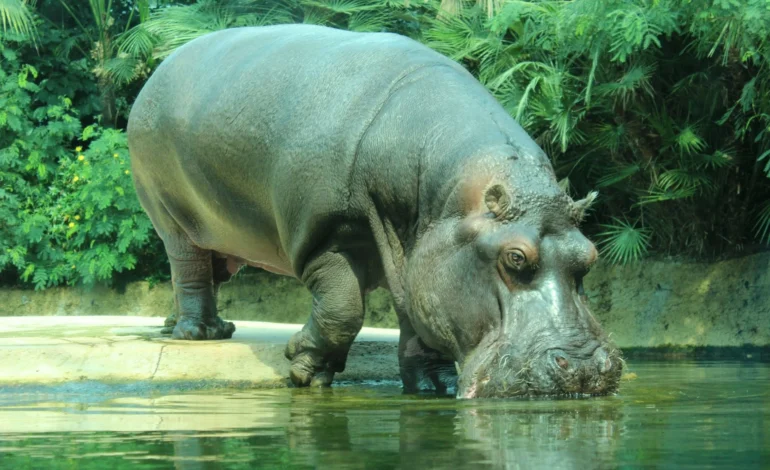
While hippos today are found only in sub-Saharan Africa, a new analysis suggests they survived in central Europe for longer than previously thought. An analysis of ancient bones reveals that the mammals lived in the Upper Rhine Graben, 47,000 to 31,000 years ago, during the last ice age. The findings come from a collaboration between the University of Potsdam and the Reiss-Engelhorn-Museen Mannheim, and Curt-Engelhorn-Zentrum Archäometrie, and were published in Current Biology.
Until recently, it was believed that hippos disappeared from central Europe around 115,000 years ago after the last interglacial period ended. The new study shows that the animals persevered in southwestern Germany for many tens of thousands of years, lasting well into the middle of the last ice age.
The Upper Rhine Graben provides valuable information about ancient climate conditions. Animal bones buried under layers of gravel and sand provide a rare look into the ancient past.
“It’s amazing how well the bones have been preserved” Dr. Ronny Friedrich, a specialist in age determination at the Curt-Engelhorn-Zentrum Archäometrie said. “At many skeletal remains it was possible to take samples suitable for analysis, that is not a given after such a long time.”
The team examined fossils from numerous hippos and used both genetic and radiocarbon dating methods. Ancient DNA sequencing showed that the Ice Age animals were closely related to modern populations in Africa, being the same species. Radiocarbon dating meanwhile confirmed their presence during a warmer phase of the middle Weichselian glaciation. Conditions temporarily allowed them to survive in central Europe.
Additional analysis of the genome showed that the European animals had very low genetic diversity, suggesting a small and geographically isolated population. Fossils show they lived alongside mammoths and woolly rhinoceros, animals adapted for colder climate.
Stay tuned to EyeOnLondon for the latest news and expert opinions.
Follow us on:



Subscribe to our YouTube channel for the latest videos and updates!

We value your thoughts! Share your feedback and help us make EyeOnLondon even better!