Exoplanet temperature mapped by JWST

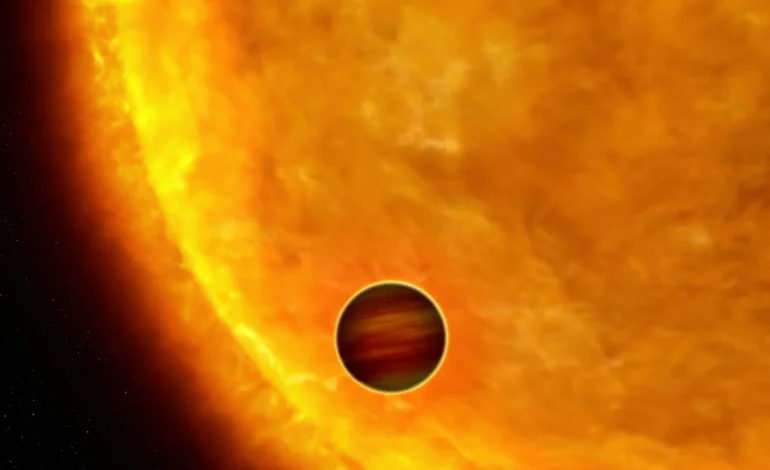
For the first time ever, astronomers have created a 3D map of an exoplanet, a planet outside out solar system. The map, created by the James Webb Space Telescope (JWST) reveals distinct temperature regions, including one so hot that water vapour breaks apart. The research was published in Nature Astronomy and led by a team from the University of Maryland and Cornell University.
The study looked at temperatures on WASP-18b, a gas giant classified as an “ultra-hot Jupiter,” some 400 light-years away. The team used a method called 3D eclipse mapping, also known as spectroscopic eclipse mapping. This is the first time the technique has been used to create a full 3D temperature map, building on previous work in 2023 of a 2D eclipse map.
With this, scientists can chart atmospheric differences on other exoplanets observed by JWST, in the same way that ground-based telescopes documented the Great Red Spot on Jupiter.
Finding an exoplanet is tricky because they are much dimmer than stars, often contributing less than 1% of the total light. Eclipse mapping measures tiny variations in light as the planet moves behind its star, alternately hiding and revealing different regions. By tying the small brightness changes to a specific location on the planet and analysing them in different colours, astronomers area able to reconstruct temperatures across latitude, longitude, and altitude.
The exoplanet WASP-18b is around ten times more massive than Jupiter and takes only 23 hours to orbit its star. Surface temperatures can reach close to 5,000 Fahrenheit or 2760 Celsius. These factors mean it provides a stronger signal compared with other exoplanets for the mapping method.
Stay tuned to EyeOnLondon for the latest news and expert opinions.
Follow us on:



Subscribe to our YouTube channel for the latest videos and updates!

We value your thoughts! Share your feedback and help us make EyeOnLondon even better!